Monday, August 21, 2017

The Eclipse!

Today is Monday, August 21st, 2017.

The Solar Eclipse is the talk of the town today even more so than the latest misstatements of Trump or any other politician on either side.  I'm sure the media will get right back on that mission as soon as the eclipse is past.  I must admit I find it interesting and I have made a box to watch the eclipse through but I am not going to drive to the place where I can see it in totality.  I'll leave that to those who are more excited than I am.


I suppose there will be some who take advantage of the premature darkness and cause some kind of calamity such as tearing down a statue that they find offensive.  I seem to remember someone said not too long ago that her and her husband had to "Change History" to achieve their goals.  I suppose eradicating statues and plaques that you find offensive is one way of doing that.

In the meantime I will continue on working and living my life in a way that is positive and not causing problems for others whether I agree or disagree with their ideology.

It has been a very busy summer for me and I have once again neglected this blog. I have been maintaining a good weight at 175 and I was working out pretty hard every morning until a couple of weeks ago when I was once again sidelined with a back issue.  I am on the mend and hope to finish strong this year as my fitness quest continues!

By the way, I bought an Indian motorcycle in the spring and I am enjoying it allot! I have plans to make some trips in the fall up to the parkway and beyond.  So far I have only had time to do one ride of any consequence which was to Chesnee, SC.  Went to a great antique bike show there.


Tuesday, March 28, 2017

Fitness Quest - Fitness Challenge

I like the word quest, it conjurs up visions of epic adventures and the conquering of foes.  I suppose that's because I grew up reading heroic fantasy novels and comic books. Yet in this case my quest is to step outside of my comfort zone and see how far I can push myself.  I am in some ways entering the realm of the unknown by pushing harder than ever before as I work out and try to achieve epic results!  It all started many years ago when I saw this picture...


I was barely 50 when I saw this and it was startling to me.  At first I thought it was photoshopped but as I researched I found it was the real thing.  At that point it was simple, if HE can do it, I can do it.. So back in 2014 I started my first year long quest.  I was doing well for a few months and was in great shape until I hurt my back.  It was not long before I fell back into the same old habits of not exercising enough and eating all the wrong things.

It took me until late 2016 to get my mind right (and my back) again and I began working out every morning and pushing myself a little further than before.  I created a good foundation to start my new quest for 2017.  It hit me in Feb., that I was doing so well it was time to step it up and I began my 100 push up a day challenge. Honestly I had no idea if I could pull this off but I have managed to stay true to the course and the challenge is now almost complete.  

Once I get into April I will come up with a brand new challenge for May.  Hopefully I can continue this all year and by December I will be closer than ever to crashing through any so called limitations and moving beyond what we consider normal for our age group.  I will be 56 in June and I want to prove to myself that I have no limitations once I set my mind to a quest.

One final thought.  Since I began this challenge I have posted my results on FB each day as I try and crack the 100 pushups in two minutes barrier.  I know some folks may think I am trying to brag about this or that but my true goal is to inspire.  It's not often people my age take on a challenge like this, at least most of the people I know.  I want to inspire at least one person to get in better shape, eat healthier and live longer.  If I do that my journey is all the more sweeter.  

At 56 I know over half my life is over and I am going to live it to the FULLEST!!!!


Wednesday, March 15, 2017

Challenge update!

If you were here last time I posted you know that I began a 100 pushup a day challenge! I started on Feb. 27th so today marks day 17 of the challenge.  I am happy to report that I have stayed true to the course only taking one rest day (last Sunday). So, I have done 1600 pushups in the last 17 days. I added 100 crunches to the mix about 5 days ago and I also stretch and warm up with jumping jacks each morning before and after the routine. I've got to tell you I am feeling pretty good about this.  I feel stronger and although I have had some pain I have fought through it.  I am looking forward to completing this challenge and moving on to the next one which I think will be squats.  Cannot neglect the legs!!! I have managed to clock in under 4 mins twice the past few days and I am hoping to get down to 3 minutes soon.

Now onto other news.  I have been asked by a Shotokan Karate Sensei I know to help with a Self Defense class for women in Stallings NC at the Carolina Martial Arts gym I used to belong to. I am going tonight and meeting my friend April there.  She is one of our Aikido students who made it to brown belt. Hopefully having her there to demonstrate some of the techniques on me will make the women feel more comfortable.  Not sure what to expect but I think it is worth a try.


 Well that's it for now, must get ready to go to work!

Have a blessed day!


Peace


JD

Thursday, March 02, 2017

March 100 pushup Challenge

As an aging martial artist and fitness buff I am always looking at ways to stay in shape and increase my strength and stamina.  As I wrestle with father time and try to beat him at every move, I find that to continue moving forward I have to challenge myself in a myriad of ways.


A few years ago I took a 90 day challenge and lost over 30 lbs.  This year I am taking a year long fitness challenge and as part of that I am currently doing a 30 day 100 push ups a day challenge.  Now I'm in decent shape for an old guy but let me tell you this is no piece of cake.  The rules are as follows: Five minutes, 100 push ups.  It's that simple.  Break it up however you want 2x50, 4x25, 5x20, 3x33+1, whatever works for you. I have been at it for 4 days, I started a couple of days early and I can feel the difference!  I hope you will consider joining me.  As always with any challenge like this.  Set your own pace but push yourself further than you normally go.  That's how you achieve greatness in anything you do..  Just my humble opinion. As always don't hurt yourself.  If you have serious pain, STOP!  Check with your doctor or chiropractor before you continue...


Oh, by the way.  I am looking into a martial art that a friend led me to via youtube called Aiki Jitsu.  I think this might be the next big challenge for me in regards to my third black belt. If I can find a school in Charlotte that teaches it. I have a lead on a school in Mint Hill.  I am hoping to observe their class soon.

https://www.youtube.com/watch?v=VHGnQbcvfMI

Here's some additional  info I found about it.

Aikijujutsu is any jujutsu discipline that focuses on the Japanese principle of “aiki,” in which a practitioner blends with and defeats an opponent by using one’s internal energy (ki or chi). Various schools of jujutsu and aikijujutsu can trace their lineage back to daito-ryu. Conflicting stories state that either Shinra Saburo Minamoto (1045-1127) or a doctor Yoshimitsu in 1180 lay down the foundation for daito-ryu aikijujutsu (considered the oldest aikijujutsu in Japan) by discovering the mechanics of the joints and muscle attachments while dissecting cadavers. From these discoveries, joint-locking skills, techniques to cause muscle twisting, and strikes to vital points were formalized and perfected during battle.
Takeda Sokaku—whose most notable student was aikido’s founder Morihei Uyeshiba—modified daito-ryu by combining his knowledge of daito-ryu experience with sumo kenjutsu (swordsmanship) and several empty-hand martial arts. In the late 1800s, he named his style daito-ryu aikijujutsu. Takeda Sokaku then honed the art by teaching military officers, police officials and aristocrats.
Similar to bujinkan, aikijujutsu was founded as a “dark,” secretive and highly combative samurai art. Unarmed fighters used aikijujutsu to kill samurai in full armor.

Until next time,


Peace

Wednesday, February 15, 2017

Fitness after 50!


This is Jack Lalanne at 71!


I have posted many things here on this blog over the years but the primary focus is martial arts and fitness for those of us who are beyond 50.  I will be 56 this year and it is easy to find yourself not wanting to workout when you wake up stiff and sore from old injuries.

 As a guy who has trained in martial arts steady for the past 10 years and achieved 2nd degree black belts in two disciplines, I have the bumps, bruises and joint pain to go along with it!  Not to mention the dreaded arthritis creeping into my hands and fingers.  Being a guitar player also this is really a problem. I hate to take much more than an aspirin or two but looks like some medication is needed from time to time to deal with this stuff.  I'll let you know when I find something that works for me.  In regards to aspirin, be careful!  A good friend of mine from church had been taking an aspirin a day for twenty years by order of his doctor to prevent heart attacks.  He's a good bit older than I.  Well it landed him in the hospital with a bleeding ulcer in his stomach!  So be extra careful taking any kind of pain meds every day.  Check with your doctor if you notice anything wrong.

Now, let's get to the good stuff, working out! 


I like to work out in the morning.  I try to do a small routine each day to get me started and that includes stretching.  Start with jumping jacks, then squats, crunches and push ups.  Repeat if you can, even a third set if you have time and are in good enough shape.  In regards to how many, it's up to the individual.  What can your body take?  Of course your goal is to improve over time, add more reps and get stronger.  Me, I like to do 25 J Jacks, 20 squats, 50 crunches and 25 or 30 push ups, then repeat if I have time.  If you get to the point where you can do a third set of this you are doing very well.

Do NOT forget to stretch!!!  Make sure you spend at least 3 to 5 minutes stretching in-between sets.

 Once you get in good enough shape to do 3 sets of these you can add an exercise or two to the routine to kick it up another notch! Try man-makers if you are feeling really strong or just add some dumbbells to the workout and do some curls and overhead dumbbell presses.  Hold them while you squat if you like as well!


Ok, that's it for now.  Go on out and take on the world for another day.  God bless and stay safe.  I will be writing some about Church Security in the near future, stay tuned for that...

Thursday, January 26, 2017

Blue Light Special


It was a cloudy day, but it seemed that every day was cloudy now. I was hungry, as usual, but I felt good about the prospects of what may come of this new place I had heard about. I was there with a friend that I was recently introduced to at one of our meetings. It seemed that we had lots of meetings. I guess because there were so many new problems to deal with these days. The main theme in all our gatherings was that there is strength in unity. So much more could be accomplished together rather than trying to make it on our own.

 We lined up behind our buggies. We were in what used to be an old grocery store that had long ago been looted and abandoned. It had been taken over, I suppose just recently, by the new proprietor who introduced himself as Big John. There were a few holes in the roof and the place smelled of mildew but other than that it was OK. 

The loud, bearded man that ran the place, who some whispered used to be a preacher, Big John, was barking out orders. “First rule, no one talks while I’m talking, I will not be repeating myself today people, I have a sore throat and I do not intend to talk anymore than I have too, if you do interrupt me you are out. Next rule, no pushing or shoving, you will behave yourselves when you shop in my store or you are out and you will not be allowed back, I will remember you! Next rule, do not take anything out of anyone else’s basket, if you get caught doing that you are out and banned for good! Any Questions about the rules?” No one seemed to want to question the large man with the booming voice, and rugged features. 

The only sounds heard over the distant coughing of a generator somewhere in the background were babies crying in the other room. You could see them with their dirty little faces behind a big glass window with a large crack in it. “Good, since you all understand the rules now I will tell you what our specials are today.” The people who listened intently, nervously shifted back and forth on the chipped and broken tiles in the worn, grimy floor. Big John Bradford, finished his speech by giving everyone the lowdown on the special prices of the frozen goods. This was the weekend, and as was the custom, frozen goods were always on special every Saturday. Of course you could still find other stuff, canned and jar goods mostly, some boxed stuff that probably was good if it had not been smashed too bad. You could also find some candy, gummy bears, even chocolate if it had not melted yet. Bottled water was also on sale but it was not cheap.  In fact it was probably the most expensive item at the market this day. People would kill for this stuff, but Big John's attitude seemed to keep folks in check today.

 The prices were pretty good today, you could trade good weapons like knives, guns and ammunition if you had any or you could trade tobacco products. Money was no good, but jewelry was still valuable although not worth much compared to a Colt 45 with bullets. The big guy wore one on his hip and no one bothered him for that single reason alone I suspect. 

This was the way it was since all the factories and grocery stores had been shut down after the grid went dark. The EMP attack had taken all our power and communications. It wasn't long before nuclear plants began to melt down, chaos had ensued and millions died. Luckily, a few of us had survived in our bunkers but our food lasted only so long. Once we became hungry we set out looking for food and found that many others like us had survived too.

You could find these black market stores set up if you knew where to look, This of course was my first visit and let me tell you it was a blessing. My family had not eaten a decent meal in more than a year. We were scraping and scrounging like everyone else. The only meat we had eaten at all lately was from some skinny racoons we had caught sniffing around the compound where we lived. The core meltdown at the Nuclear Plant North of the city had seen to it that no one, at least none of the survivors we knew of and they’re weren’t many of us, would have a good meal for a long time. Most the food had been contaminated. When we found this guy selling what was supposed to be good food, we were happy to stand and listen to him shout out his rules in order to have something to eat that was not too radioactive or spoiled. I looked up at the big guy again just in time to hear him begin his prayer. 

“Before we begin people, let us pray. Dear Lord, thank you for all the food we have here today to share with these hungry people, your children. Bless these brave souls and bless this food for us all to share and enjoy for the nourishment of our tired bodies, oh Lord. Lord, please look after our loved ones who have been taken from us in this time of chaos and hardships. It is only faith in you O’ King of Kings that gives us the strength and courage to continue to survive in these troubled times. Thank you Lord for what you have blessed us with on this day, in Jesus name we pray, Amen.” Everyone repeated that amen and looked up with eager, anticipation in their bleak and hungry eyes. 

“OK people, start shopping, and remember, there is only one door out of here and you pay me as you leave!”


Read more stories like this from the ebook:  "Lost Lore from an Ancient Future"

Saturday, January 21, 2017

Setting Goals for 2017

This is an article I published on Linkedin..

https://www.linkedin.com/pulse/do-you-have-goals-jd-pearce?trk=hp-feed-article-title-comment


Some folks are goal oriented, others are not. Perhaps they don't like setting goals for fear of not achieving them and then being disappointed. Whatever the reason, it is my firm belief that we need to set goals. 
Here's why!
This is how we hold ourselves accountable and how we move ahead and achieve the objectives we desire. Whether it's our business or personal lives, we must be able to measure what we are doing to determine how we are doing. Just like when a company asks you to evaluate their performance, this is key to improving. So next time you sit down to reflect upon your life and where you are now, as opposed to where you want to be, set some goals and start working to make things happen.
It can be as simple as this, for example:
What do I want to accomplish in 2017?
  1. Pray More
  2. Spend more time with family
  3. Read More books
  4. Play guitar more
  5. Be kinder to everyone
  6. Go to Church more
  7. Spend less on credit cards
  8. Meet new people
  9. Exercise more
  10. Write more
So you see, it's easy to come up with items you would like to improve upon, the key is to write it down and put it somewhere where you will read it and be reminded of it each day or maybe each week. Keep a journal if you like to write and monitor your own progress.
If you are really ambitious you can set lofty goals like this!
  1. Start a new business
  2. Do 25 sales call a week
  3. Build my Dream Home
  4. Lose 30 pounds
  5. Travel around the World
You can go slow or you can go BIG, it's all up to you. One thing to keep in mind, try to make goals attainable, if you shoot for the moon, sometimes you don't make it all the way and it can be discouraging. Start small and work you way up to BIG!
Good Luck and go out and make it happen this year, all you need is a good attitude, a good network and a goal oriented vision of where you want to go.
Happy Trails!
JD Pearce

Sunday, January 15, 2017

A you tired? This will help!

Drink Water!

Yes, it's that simple.  Drinking water can refresh your entire body and refocus your mind.  Many people are dehydrated.  From mildly to wildly!  Most of us do not drink enough water because we drink too much coffee, soda, beer, etc..  Many of these drinks are diuretics and will cause you to purge the water from your system leaving you dehydrated. I know because I have had that problem for many years.  I am a coffee addict and I love to quench my thirst on a hot day with cold beer instead of water.  So that leaves me dehydrated most of the time.  Even when I try to drink more water I have trouble drinking as much as my body needs.  So since we have just begun a new year, let's make it our goal to drink more water!  Water is our source of life, we can survive for many days, even weeks without food but without water, the body will shut down in about 3 to 5 days.  Think about this, when we sweat or exhale we are losing the bodies moisture just as when we eliminate waste.  In a body made up of 60% water this can deplete our needed supply very quickly.  Brain tissue will begin to shrink and organs shut down. We can not think clearly or concentrate as well.  If you are working in a dangerous environment this can lead to disaster!  I drive allot and when I start feeling tired  and losing focus I reach for the water (if I have any) and within seconds after a long drink I feel refreshed and my mind becomes clearer!  Here's a very good article extolling the virtues of drinking and using water for good health.

So, Drink Water My Friend!


Benefits of Drinking Water!http://greatist.com/health/health-benefits-water

Saturday, December 24, 2016

Goals Accomplished!

Greetings Friends

Since I was last here many great things have happened in my life and I have accomplished some major goals.  First of all I finally received my 2nd Dan in Combat Hapkido and a few months earlier I was awarded my Nidan in Tomiki Aikido.  These are two important goals I had wanted to accomplish in life and as a 55 plus age martial artist the journey has been long and full of injuries.  I finally got healthy enough to get it done and now am on my way to pursue some different interests.

I will still be training in Combat Hapkido but instead of pursuing 3rd dan I want to focus on going back through the curriculum and perfecting many techniques we learned along the way.  My Aikido dojo has closed unfortunately and I am looking for a new place to train for now. I will pick back up on that effort after the holidays.  I also want to put in a couple of years of combat handgun training.  We are currently looking into some classes for this.  I am always exploring martial arts and trying to add new, effective techniques to my tool box so this will be a never ending endeavor.

Just today I found a great video explaining the front kick as a serious weapon in great detail.  Check out this link!    https://www.youtube.com/watch?v=8HgoLLezD14

By the way:

Congrats to Pres elect Donald J. Trump for putting and end to Hillary Clinton's chances of becoming President.  As a small business owner I am once again optimistic about the future of America now that the socialists have been defeated!

I have unfortunately found out that many of my friends and family are dealing with terrible illnesses lately.  Please join me in prayer for those who need healing.  Bobby, Bill, Freddy and a few others are on my list.

Finally, it is Christmas Eve and I am about to get ready to go to Church and sing for tonight's service.  As a member of the choir and the praise band I am blessed to be a part of our music program and along with martial arts, this music is a true passion of mine.

Peace and Merry Christmas!


JD Pearce

Friday, November 13, 2015

W. Hock Hochheim

I want to introduce you to a guy I had the pleasure to train under a couple of years ago.  Some of my Combat Hapkido partners and I went to a seminar in Huntersville, NC held at a Krav Maga school.  There we worked with Hock and Nick Hughes, Nick being the owner of the Krav School.  I'll just say if you ever have the chance to train with either of these guys, don't miss it!

 The link to his blog is below.  Go check it out!


http://forcenecessarytv.blogspot.com/


Terrible, Terrible, Mistaken Knife Grips

     About 20 years ago, I wrote some magazine articles about what I dubbed as The Cancer Grip of the knife. Its a saber grip, as in "the sharp end of the knife sticks out of the top of the hand." You would think people would know this but some don't. Anyway, I kept seeing some of the biggest names in Filipino Martial Arts slashing, stabbing in the air like mad, followed by their students, with this Cancer Grip. This is when the ball of the thumb and the thumb is up off the knife. You can't stab, you can't slash, you can't cut a steak this way, and while dueling its an easy knock-out disarm. Yet many "FMA Gods" were slipping in and out of this grip in photos, films and teaching. There is even an entire Filipino knife system (not a popular one, I might add) that only uses the thumbs-up grip. Not good. And practitioners in training are still simulated stabs and slashes with these grips.

     This is an "international" problem. A now rather famous American knife guy, on the cover of his first knife book years ago was, and unfortunately still, is shown stabbing someone with this worthless grip - just mindlessly replicating the big boys. He knows better now. Folks, you need the ball of the thumb and the thumb to hold the knife to stab and slash, to even cut a peanut butter and jelly sandwich.


Saturday, September 12, 2015

USCCA Article

I wanted to share this today...


When I teach a self defense class the very first thing I cover is situational awareness.  Before talking about martial arts or guns or weapons of any kind I always emphasize that your mind IS your most powerful weapon!

The following article is also about SA... Please share with someone you care about.

Be safe and always pay attention!

JD


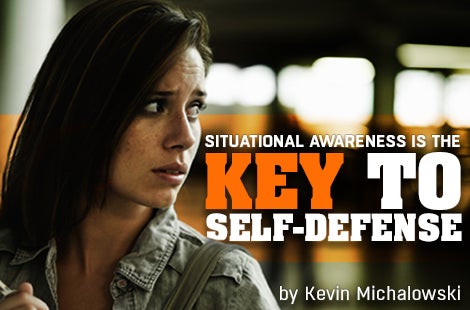
Situational Awareness is the KEY to Self-Defense

Kevin_CCR_Article_9-11-15
inShare

I might be rehashing some things you have already heard me say, but recent events compel me to speak out again.
When I am asked, “What can I do to stay safe?” the best answer contains just two words: pay attention!
The first thing you can do is put your smartphone in your pocket and start looking at what’s happening around you. For all you people reading this right now on a smartphone, I expect you to be behind a locked door or to have a lookout you trust with your life within arm’s reach. If one of those elements does not describe your current situation, YOU ARE AT RISK.
Why am I saying this now? Two reasons:
Before the live on-air shooting of three people, the gunman approached, pulled out his gun, said the word “bitch,” and then stood by with his gun out for more than 20 seconds…and none of the victims noticed anything until he fired the first shot.
I’m not saying the outcome would have been any different, but there is a chance that something could have changed. People would have had the chance to fight back if only they had paid attention to someone walking in on them while they worked.
The next thing that really set me off was an incident in Omaha where a woman was attacked while standing in the lobby of a church. Her purse was stolen and she was punched in the head and knocked to the ground.
It angers me—but does not surprise me—that criminals would violate the sanctuary of the church. But looking at the video, there are some things the woman could have done differently to stay—if not safe—safer.
First up, she had her back to an unlocked door and she was not paying attention to anything but the pamphlets on the table. Granted, she was in a church. It is likely her safe place. The criminals not only took her purse, but they took her sense of security as well.
Situational awareness is not just looking around; it also involves actively changing things to make your surroundings safer.
In the case of the news crew that was shot, when someone walks onto the set or near the workspace, that person should be addressed immediately. Ask questions. Get answers. If you don’t immediately get the response you like, be moving and looking for an escape route or an improvised weapon.
At the church, the woman should have remembered my cardinal rule of being inside a building: if at all possible, be where you can see the door. A double bonus: if she would have had the small table between the attackers and her, she would have had more time to respond or maybe move or access a weapon if she had one. This incident is also a good reason why we tell people not to carry guns in purses.
I understand that she is 76 years old and there might not have been much she could have done against two attackers, but that does not mean she should do nothing. If you are an older person, or if you know an older person, situational awareness becomes all the more important in order to gain every advantage.
A pistol is a fine tool for self-defense, but it is not the only element of effective self-defense. If you don’t even see the attack coming, your gun won’t do much good.


Sent from my iPhone~JD

Friday, May 29, 2015

Combat Hapkido Training


For the past few weeks I have been working off and on with my Combat Hapkido DVD's.  Watching from the beginning, going through my notes and re-familiarizing myself with all the earlier techniques.  I will be training in Mooresville next weekend at Flagg's Personal Defense Club. Mr. Handy and I are close to testing for our 2nd degree black belts.  We have a seminar in August up in Southern Pines so maybe we will be ready to test by then.  Looking forward to getting this one done and moving on to the next level.  Hoping to start a charter in the Charlotte/Matthews area in the next year or two.

This is a great martial art! Self Defense oriented, no kata or traditional drills just working strictly on self defense techniques each time we train.  Sensei Flagg offers additional tid bits with his diverse background in Judo and Jujitsu as well.  Overall a great learning experience for those who want to learn self defense.


Peace


JD


Monday, May 25, 2015

KI Energy

Ai - Ki - Do

One translation is: The way of combining energy.

You can use many words to replace energy but it is the Ki in Aikido.  So many people ask just what is Ki? You may get many different answers, depending on who you talk to and from what culture they stem but here's a definition I have come to understand.

Consider life in any living creature.

In humans you might think of is as the breath of life or even the life spirit. It is the energy  or power that flows through our bodies that makes us living creatures.  Think of the breath in your lungs, the blood that pumps through your body as the heart beats.  The electric burst of power that happens when the synapsis in your brain fire billions of times per second.  This is all part of the Ki energy that flows through us all.  Where does it come from?  Another important question that you may find many different responses to.  Some say God, others say the earth or the wind or the universe.  No matter where it originates we all live thanks to the Ki energy in our bodies.

Ki, as I know it from the Japanese martial art of Aikido and the Korean martial art of Hapkido is also known in many different cultures as Qi, Chi, Gi, Ghi, X, and many more.  So many differing ways to spell the same thing, yet they all recognize it as being some kind of energy.

Now let's look at the role of Ki energy in martial arts and in Aikido specifically.  As Akidoka, we learn to channel this energy into our techniques by focusing our power into our center.  This is where the human body is the strongest.  Our center of gravity can be found in the middle of our bodies, to be more specific it is the a place in our abdomen just above the groin and below the navel. When performing a technique such as kote-gaeshi or a wrist lock, you focus your power in your center when you turn uke's wrist.


Further more in 99% of all Aikido techniques you will focus your power here in your center. This makes you stronger than your opponent in most cases or allows a much weaker opponent to break the balance of a stronger one.  

Consider this, when a person tries to hold you by grabbing your wrist with both hands they can pull you and control you if you are off balance.  Yet, if you find your center of gravity and use the strength of your body and not just the pulling motion of the one grabbed arm you can break away from the hold or break the balance of the attacker and then use a technique to breakaway, pin or throw.

There are some schools that take the spiritual approach to defining Ki and even some who try to teach it as a supernatural force with mystical origins.  This is fine and I say to each his own but remember we all have Ki but it takes training and practice to focus that energy and use it properly when it comes to martial arts.


Peace


JD


Saturday, May 23, 2015

Aikido and Self Defense


Aikido gets a bad rap it seems from many folks.  I learned today that a martial artist that I have worked with for years in Combat Hapkido, thinks that the Tomiki style Aikido I have studied for over 7 years now is only Kata and sport.  I have to assume many other martial artists out there are under the same false impression.

The truth is that Tomiki Aikido does have many Kata forms but the dojo where I train does not teach Tanto Randori which is the sport aspect of Aikido.  We focus on some of the original Kata like the 15 and 17 basics as well as the Dai Ni and Dai San among other drills.

We also take time to do free style which is where we can use the techniques in a very fluid situation that simulate a real attack.  We attack from real grabs and punches as one would expect on the street.  Using the basic principles of breaking balance, focusing our Ki energy into our center, using circular motion to break the balance and perform take downs and throws we are able to make techniques work very effectively.

More on this later...


Saturday, May 09, 2015

John Pellegrini’s Combat Hapkido Invades U.S. Military Training
Posted By Patrick Sternkopf On March 20, 2011


In 2004 John Pellegrini was inducted into the Black Belt Hall of Fame as Instructor of the Year. Since then, it’s been tough to get in touch with him because his art, combat hapkido, has become one of the most sought-after systems in the world. That means the master is in demand from New York to California, from Afghanistan to Colombia. In this exclusive interview, John Pellegrini talks about the special aspects of his art that make it work so well for military personnel and law-enforcement officers.
Black Belt: Why is combat hapkido so appealing to the military when many traditional martial arts are not?
John Pellegrini: The word “traditional” probably answers the question. In traditional arts, a lot of attention is paid to posture, stance and movement. Everything is done in a way that reflects the traditions and essence of that art. Remember that all martial arts were designed for the battlefield, but it was the battlefield of 300, 500 or 1,000 years ago. There were different weapons and different rules of engagement.

Take your weapons skills to the next level with our free training guide.
Ninja Gear: Master Modern Self-Defense Weapons With Ninjutsu Training [1]

Since then, warfare has evolved, and the martial arts that accompany the warrior also must evolve to reflect the new terrain, missions, weapons, tactics, strategies and rules of engagement. So we have to evolve, too. In combat hapkido, we’ve stripped away a lot of the traditional trappings—such as the classical stances and positions. We’ve [kept] the core of the art because basically a joint lock is a joint lock; nobody’s going to reinvent it. We’ve stripped it down to emphasize close-quarters conflicts for modern battlefield environments, and we take into account that when [a soldier] strikes, joint-locks or takes somebody down, he’s going to have equipment on.
Black Belt: Is there a lot of individual combat on the battlefield today?
John Pellegrini: There’s still individual combat. However, the advantage soldiers have is that they’re rarely alone. They’re operating in groups. If someone comes out of a house and attacks you with a knife, there are other soldiers to cover, protect and help you. But what if you’re in a group of three out patrolling, and the other two get shot or step on a mine? Now you’re alone. That happens a lot in house clearing—there may be two or three soldiers, and one of them goes down and then a couple of people come out of the house. That’s when the close-quarters fighting begins.
Black Belt: What role does an empty-hand martial art play when so many guns are present?
John Pellegrini: People think that soldiers engage the enemy only with their weapons—that every time something happens, the soldier just fires his M-16 and solves the problem. Many times he does, but the mission of the Army nowadays has changed. They do a lot in an urban environment. It’s started to resemble law-enforcement functions. They walk down the street, patrolling open-air markets, or they go into houses to confiscate weapons. Yes, the weapon is the primary defense, but sometimes you’re at close quarters and the person comes from behind or gets right in your face, and it’s very difficult to use the weapon.
There’s a second problem: You want to use your weapon, but there are women and children around. You have to be careful because of the bad public relations that can be generated for the United States. You have to have some hand-to-hand skills.
I’m not saying that every soldier in the U.S. Army must become a black belt. All I’m saying is that they should get a minimum amount of skill. Take a course in combatives that gives you a few kicks, strikes, controlling techniques and pressure-point techniques so you can take somebody down without the use of your weapon.
Black Belt: What should that “minimum amount of skill” include?
John Pellegrini: I would like to see every troop learn at least a simplified version of what we do. We don’t kick to the head; we don’t jump and spin; we don’t do anything with big, wide circles. Everything is synthesized with a core of techniques that give them a fighting chance when they’re in close quarters.
Black Belt: Which hand-to-hand combat techniques do you focus on for the military?
John Pellegrini: The most important use for the hands is to make sure the attacker doesn’t grab your weapon. The second most important use is close-quarters blade defense. Somebody approaches you, maybe to ask for food or information—or maybe you’re interviewing the person—and all of a sudden he pulls out a knife. That’s why you need trapping techniques, basically redirecting the attack and immediately closing the gap and taking control of him. We teach a combination of techniques, like low-line kicking, strikes with the hands and joint-locking with the possible application of pressure points. That obviously doesn’t work all the time, depending on the clothing and other factors.
We always encourage striking to the head because it contains the computer of the human body. You want to rattle and stun the computer and take away the vision of the attacker so he can’t see what’s going on. Then you can take him down easily.
Black Belt: What if the other person is wearing a helmet or body armor?
John Pellegrini: The people I taught in Afghanistan [said they] seldom encounter that. Even if the bad guys wear a helmet, their eyes and trachea are still available. You can target the face.
Now, our people wear helmets all the time, and we encourage them to use them as weapons. Head-butting has a whole new meaning when you’re wearing a helmet. Our people also wear Kevlar body armor, but it covers them only up to a point. Their arms are still open, and they contain serious arteries, so they can still get slashed. The neck is somewhat covered, but it’s also open in places. The femoral artery is open, the groin is open—it’s not a complete set of armor like medieval knights wore.
That brings up another point: A lot of military combatives courses are 90-percent ground survival. I’m appalled that some units learn Brazilian jiu-jitsu and are encouraged to fight on the ground. When you look at their training on base, they’re wearing shorts, gym shoes and T-shirts while they roll around and do ankle locks and armbars—and that’s beautiful. But do that on rocky terrain in Afghanistan with the soldier wearing 65 pounds of equipment, and it’s insane.
Do we teach ground survival to the troops? Absolutely. As a matter of fact, several months ago, the 10th Mountain Division sent six of their team leaders here to Phoenix to spend a week with us and get certified as military ground-survival instructors. [They know they] can be pushed to the ground, fall or lose their balance, and if the guy gets on top of them with a knife, there could be a close-quarters struggle. But the idea is to immediately dislodge the person and recover the dominant standing position. It’s not about grappling and rolling on the ground.
Black Belt: What kind of grappling techniques are effective in those situations?
John Pellegrini: If you’re on the ground, you need to immediately strike hard. The head is the main target. Take out the eyes, the breathing apparatus, the throat, the nerve groups. Try to stun the person long enough, or hurt him as much as possible, so you can get up. If you find yourself on the ground, hopefully a couple of buddies will come to your aid, deploy their weapons and grab the person.
Black Belt: Are there techniques you teach for disengaging from someone who may have jumped you from behind or surprised you from a doorway?
John Pellegrini: Yes, they’re mostly sweeps and takedowns using what we call the balance-disruption system, [which is characterized by] taking away their balance, trapping their feet or doing some low-line sweeping. If they come from behind, you can do a hip throw, but it’s not a high throw like you’d see in a tournament.
It’s not that easy to attack soldiers from behind because of what they carry on their backs. So if somebody comes from behind and tries to bear-hug or choke a soldier, there’s a big backpack between the soldier and the attacker. It’s not necessarily a smart move.
Black Belt: Do you teach kicks? Are they restricted to low targets?
John Pellegrini: We teach kicks to the groin—if it’s available at close quarters, you can employ your knee, shinbone or boot. But mostly we do kicks to targets that are even lower. There are several pressure points on the legs and in other areas that can instantly drop an attacker.
We teach only four kicks to the military: the front kick, the side kick, the low-line roundhouse kick to the side of the leg and the scoop kick, which is used when you’re almost in a grappling situation and need to use the inside blade of your boot to rake the shin. With those four, you should be able to take care of any situation.
Obviously, there are a couple of reasons we use only a few kicks and only extremely low-line. One of them is that 65 pounds of equipment. How long do you want to be off-balance on one leg? If you’re already in a clinch, the longer you stay on one leg, the sooner you’ll wind up on the ground.
Our kicks are low-line, fast and directly to the leg area. The bad guys don’t wear armor on their legs. If you give them a hard kick to the leg, you can drop them.
This is not taekwondo or even regular hapkido. The average soldier doesn’t have much flexibility or do stretching exercises every day like you do in the dojang. It’s insane to expect them to kick to the chest or face. The risk of having their leg grabbed and being taken down [is too great].
Black Belt: How do you handle knife and gun defense?
John Pellegrini: Law-enforcement officers often ask us why they need to learn to take away a knife or handgun when they’re already armed and in a deadly-force situation, which means they can shoot the bad guy. The problem is, sometimes you’re in such close quarters and the person manages to close the gap and put a gun to your head. Understand that when the bad guy gets the gun, if he wants to kill you, he’ll pull the trigger. When he points a gun at your face, it means he wants to capture you.
It’s a different environment for a soldier than it is for a civilian or law-enforcement officer. If you’re at close quarters and the person’s got a gun pointed at your face, you’d be insane to try to deploy your weapon. But you can employ your hands from a surrender posture and disarm him.
Black Belt: Why might the military need empty-hand-versus-weapons skills?
John Pellegrini: They’re not always going to have all that equipment and weapons. Just to give you an example, I got a call from the Pentagon about a year ago to train people attached to the Office of Naval Intelligence who were being deployed to Iraq. They were dressed in civilian clothes, and some of them had beards—they weren’t your regular troops, which is why they wanted empty-hand training. They explained that they may go into a village and extract people from their houses, then put them in a cave or a tent and interview them. In those interrogation scenarios, [often] they’re not allowed to carry weapons. So they go in and sit down with a translator.
Sometimes the detainees go nuts or try to escape or overcome the interrogator. They don’t care if they die in the process because that was the idea to begin with—which is why we have suicide bombers. I was explaining to them what happens if the guy’s hiding a knife somewhere or if he grabs a pencil or rock. Isn’t it better if the soldier has some techniques to defend himself? He needs to put his hands up, deflect the attack, take the guy down quickly and be done with it. Granted, help will arrive within seconds, but at least he didn’t get killed or maimed.
Black Belt: Are there any secret moves that you teach the military that you can’t reveal to civilians?
John Pellegrini: Yes, but I don’t call them “secret.” There are no secrets. Everything has already been invented and shown.
I refuse to teach certain techniques to civilians because they’re direct-kill techniques. I don’t think that civilians need to see them. You say, “Wait a minute, civilians can be in deadly situations, too.” Yes, and we teach as much as possible so they can defend themselves and escape. But what I’m talking about here is direct kill. That means that the technique is designed to do nothing else but kill the person by destroying the airway, the spine or a couple of other things. You’re going directly into a kill mode because maybe you’re faced with multiple attackers or weapons. You do your threat analysis and decide that you have to eliminate this person; you cannot just push him to the side, kick or punch him, or take him to the ground and put him in a joint lock. You need to eliminate him so you can face the next threat. It’s not that the techniques are different; they’re different in application.
Black Belt: You were recently in Colombia, South America. What were you teaching there?
John Pellegrini: Colombia has faced two problems for the past 30 years. One is the Marxist guerrilla movement. They do a lot of kidnappings and bombings, and they attack troops, police officers and civilians. The other problem is the drug cartels. Both of them engage the troops and the police.
The guerrilla operations often take place in a jungle or a mountainous environment. They use different tactics, but once you start looking at the threats they face, you see that the threats aren’t much different from what our troops are facing in Afghanistan and Iraq. You employ your weapons first, but what happens if you’re in close quarters or an urban environment where women and children are running around? It’s good to know some hand-to-hand techniques.
So, when we were asked to teach a counterterrorism unit of the Colombian air force, we taught them basically the same stuff we teach our military. They also needed to know how to [handle] political demonstrations when the crowd gets out of control. Obviously, they’re not going to fire an M-16 into the crowd.
The second group we did there—policemen who worked in plain clothes—was interesting. They carry sidearms and provide security for diplomatic personnel. When the American ambassador or a visiting dignitary goes out, the first layer of protection is provided by the FBI, Secret Service and our own people, but there’s an outer circle of security provided by the Colombian police. These people have received little if any empty-hand training. They’ve been taught to shoot and do defensive driving, they take courses in executive protection and they’re good at their job, but during their training, close-quarters hand-to-hand combat wasn’t emphasized. They were extremely grateful that we taught them some good stuff. We did it at the American Embassy, one of the most well-protected in the world.
Black Belt: In terms of brutality, how different is what you teach the military from what you teach law enforcement and civilians?
John Pellegrini: When our troops are in a theater of operation, they’re at war and people are trying to kill them. It’s not like a bar fight or a street fight in which a juvenile tries to snatch your wallet. There are lethal situations in civilian life and certainly with police officers, but the brutality that war brings to the equation is different. It’s employed by the enemy; therefore, we have to respond with the same kind of brutality.
On the battlefield, even if your life isn’t in danger, you’re struggling with somebody trying to hurt or capture you. You must use that brutality. You have a weapon, and you can hit him in the face with it. Imagine a police officer pistol-whipping somebody in a civilian setting; it wouldn’t go over very well.
Even so, we live in a 24-hour news environment, and our soldiers have to limit the degree of brutality they use. Think about how hard that is: They have to be in survival mode every second, yet they also have to be aware of the possibility of doing something that will come back to haunt them. When you fight people who don’t wear uniforms—in Iraq and Afghanistan, the bad guys don’t have uniforms—you never know who’s who and who’s going to do what.
That’s why, in the final analysis, what we do with our combat-hapkido training is simply give them one more tool for survival. We’re not trying to create super invincible warriors. We’re not trying to make them into martial arts experts and black belts. It’s an additional tool that might save a life and might prevent charges of brutality if a soldier can take the person down and control him instead of shooting him.

Article printed from Black Belt: http://www.blackbeltmag.com

Monday, February 09, 2015

Principles of Judo, Kenji Tomiki

Kenji Tomiki was born March 15, 1900. In 1956 when the following was first published, Kenji Tomiki was 7th dan Judo, 8th dan Aikido, Professor of Judo at Waseda University, a member of the Kodokan's Special Direction Committee, and an official of the All Japan Judo Federation. In 1971 he was awarded the 8th dan in Kodokan Judo. Kenji Tomiki died December 25, 1979.


Table of Contents

1. Physical Training
2. Shizentai (natural posture)
3. Courtesy
4. Sen (initiative)
5. Kuzushi (breaking balance)
6. Stability
7. Ju-no-ri (principle of gentleness)

1. Judo as Physical Training

It is a fundamental principle of sports to carry on exercises in proportion to the bodily strength. Judo as a game belongs to the fighting games and so often assumes all the aspects of an intensive feat of strength requiring strenuous exertions. In the practice of Judo, however, this evil can be averted by means of Kata (forms). That is, the kata enables the Judo student to adjust the amount of exercise according to his bodily strength and age, and yet is fully effectual both in respect to interest and benefit.
Judo includes the following three points in its objective on the physical side:
  • Toughness (giving steadiness, elasticity and staying power to the muscles)
  • Flexibility (giving mobility to the spinal column and other joints together with full elasticity of the muscles)
  • Adroitness (quickening the function of the motor nerves and making movements both nimble and steady)
From the standpoint of athletic physiology these qualities are correlated with one another, and the bodily activities in Judo exercises are best adapted to those requirements.

2. Natural Posture (Shizentai)

The shizentai, or natural posture, is the posture of a person standing quietly with his head and upper body kept upright, arms hanging without constraint and legs not so firm and widely apart. This is the description of the proper posture as regards its form, but it has a deeper, wider significance. When this posture is maintained, it may be considered that 1) the body keeps stability and does not fall and 2)as the limbs are kept soft they can shift to any action at any moment.
In the preceding paragraph the natural posture is explained as a standing posture. If, however, outward form or posture is left out of consideration, and the natural posture is an attitude of the body which is capable of repelling the opponent's attack, and moreover of assuming the offensive whenever there is an opening in the opponent's guard, the natural posture may be said to be possible not only when standing, but also when sitting or lying. In fact, in a Judo contest, the contestant who has fallen is not nedessarily beaten. On the contrary, he may make an attack against his opponent while lying on the mats. In fact, the natural posture is an attitude of the body which is always capable of taking the lead.
There is an old expression, "Motion in rest." It means that rest is pregnant with motion as infinite activity, so it indicates the principle of natural posture. Functioning like this, the natural posture must necessarily be studied from a mental point of view, and from olden times the ultimate secrets of jujutsu have lain here.

3. Courtesy

Courtesy is the formal manifestation of the spirit of respect. With the spirit of respect we recognize the dignity of another's personality. In other words, it is the spirit of living in harmony with one another in social life. In a Judo contest the contestants should face each other in the proper posture, looking properly at each other and using moderation in their actions. Thus they are in a state of harmony in which they never set each other at defiance, and maintain the dignity of personality. Hence it is taught that exercises in Judo should begin with courtesy and end with courtesy.

4. Initiative (Sen)

In all athletic sports one must, in order to gain the victory, surpass the opponent in mental power, technical skill, and physical strength. These three factors must be united in gaining the mastery over an opponent. The mastery is brought into play in the form of various techniques, and although there are a large number of them, they may be summed up and resolved into one word sen (initiative or lead).
In the old densho (books of secret principles) the way of taking the initiative is explained in three stages.
  • Sen-sen-no-sen (superior initiative). Superior initiative is given play in a delicate situation where one confronts an opponent who intends to attack, and gains mastery over him by subtly guessing his mentality and forestalling his actions. This is the highest reach of the mental cultivation in any military art and is regarded as not easily attainable. But if you consider it more deeply, you will find it too late to try to gain command over anything when it has taken a concrete form, and you must have the mental preparedness to hold it down beforehand. For this purpose it is necessary to learn to maintain the openness and serenity of mind as signified by the old expression, "Clear as a stainless mirror and calm as still water." Lao-tse teaches this almost divine state of mind in the following words: "It is the way of heaven to prevail without contention."
  • Sen (initiative). This is to forestall your opponent by starting an action before he begins attack on you.
  • Ato-no-sen (initiative in defense). This is not to guess the mentality of your opponent and check his action before it is done, but to start action in defense the moment you have an inkling of the offensive of your opponent. It is to avoid the opponent's attack the instant it is about to be launched upon you, and to make a counter-attack taking advantage of a pause in your opponent's movement and a disturbance in his posture. A man who takes the initiative in defense rises in opposition to his opponent's attack, and parries or averts it. Seemingly it is a defensive move. In order to stave off the opponent's attack at the last moment and restore one's position one must keep the moral attitude of initiative so as not to get worsted by the adversary.
The secrets of victory thus lie in taking the initiative, and in getting the start of one's adversary there are included the following factors:
  • The first is the eyes. From old times it is said that the important things in a bout are "first the eyes, second the feet, third grit, and fourth strength." The eyes are said to be the window for the mind. They are an index to your mind. Where the eyes are fixed, there the mind is concentrated, and naturally the will is attracted.
  • The second in importance is the posture. In a wider sense, it is the bodily attitude. It is a preparatory posture either for attack or for defense. Therefore, unless a proper posture is well maintained, not only is it impossible to take advantage of any opening for attack in the adversary, but you get your posture broken and are given a blow.
  • The third is the movement. Even though you maintain the proper posture or bodily attitude, you cannot attain your object unless your movement and action conform to the rules.
  • The fourth is the space condition. It consists of your distance, direction, and position as against your opponent. It is essential to study the principles of space condition, for from this study you will realize the secret principle of "fighting after getting the better of the opponent first."

5. Breaking Balance (Kuzushi)

Kenji Tomiki performing ude garamiKenji Tomiki performing ude garami
In the preceding section on the principle of natural posture, explanation was given regarding how to make oneself invulnerable to all possible attacks and how victory is gained. In this section on the principle of kuzushi (breaking the posture) it will he shown how it is that one is defeated. For in order to make clear the theory of victory one must at the same time know the theory of defeat. The Kodokan Judo found that the principle of the techniques (either with naked fists, or using a weapon like the sword, spear, club, etc.) of the old-school jujutsuconsists in breaking the condition of the body which has lost equilibrium. It is called kuzure-no-jotai (state of broken balance). Sometimes the opponent himself loses the balance, and at other times you positively destroy the opponent's balance, leading him to a vulnerable posture. In Judo each technique is analyzed into tsukuri (preparatory action) and kake (attack). Preparatory action is further divided into aite-no-tsukuri (preparing of the opponent) and jibun-no-tsukuri (preparing of self). Preparing of the opponent consists in destroying the opponent's balance before performing a technique and putting him in a posture where it will be easy to apply it. At the same instant the contestant himself must be in a posture and position in which it is easy to apply a technique. This is the preparing of self.
The nicety of judo techniques lies not in the action of performing techniques, but rather in the skill with which the preparing is done as a preliminary. It was the clear-sighted and original idea of the founder of the Kodokan Judo that analyzed the technique which is applied in an instant, and attached importance to the study and practice of preparatory action. In the case of the preparing of the opponent, the theory and practice of the principle of breaking the balance must be studied, while as regards preparing of self it is necessary to study the natural posture and also the theory and practice of ma-ai (space condition).

6. Stability

The center of gravity of a standing man's body is nearly in the hypogastric region. When the perpendicular line drawn from the center of gravity passes through the fulcrum or the middle of the base formed by the two feet, the posture of the man is stabilized.
A man is ready to fall when his body swings forward and backward or from side to side, and the perpendicular line drawn from the center of gravity departs from the fulcrum. However, when a living person's body loses its balance, he tries to regain it. Though the center of gravity wavers, he is able to maintain his erect posture. In case the center of gravity of a standing person wavers sharply and he is unable to maintain stability he supports his body by putting his foot forward in the direction in which the center of gravity tends. In short, the posture of a standing man appears unstable at first sight, but the equilibrium is cleverly kept by taking steps properly. If some external force acts upon the man the moment he loses balance, he falls at once, as is described below
  • The body falls easily, when something impedes the foot which is set in the direction in which the center of gravity tends, e. g., when the foot put out stumbles on a pebble.
  • When the equilibrium of the body is lost, the time when the center of gravity is lost is shorter than the time required for the peripheral sensory organ to communicate the loss of the body equilibrium to the nerve center and the latter to order the foot muscles through the foot nerve to put the foot forward; for instance, when the body inclines forward and falls forward because a sudden force is applied from the back, giving the person no time to put the foot forward.

7. Principle of Gentleness (Ju-no-ri)

In the previous sections it was asserted that we are never defeated if we keep our proper posture and presence of mind, and in carrying on movements and actions we use the body in a natural and reasonable manner. It was also shown how easily we are defeated when the balance of the body is lost. Next we must learn how these two principles should be put into practice in the judo contest, namely how to deal with the opponent's power when applied upon us, and to gain the final victory. The rules of this activity are called ju-no-ri, or the principle of gentleness.

a. The Principle of Gentleness as Viewed from the Relation of Force

When meeting an opponent, there are various ways that the principle of gentleness can be applied against the force that is used upon us. The bout may be performed in a standing position or sometimes in a lying posture. There are also various kinds of techniques such as standing position techniques, lying posture techniques, holding techniques, strangle-hold techniques, and the bending and twisting of joints. In order to give the techniques full play in their respective situations it is necessary to apply the principle of gentleness.
What then is the principle of gentleness? In the standing position techniques the contestant does not act against the force applied by the opponent, but, while following it, he makes use of the force and tries to break the opponent's posture. For instance, when you and your opponent confront each other at some interval, and he takes a step forward and pushes your chest with his hand, you too take a step backward instead of acting against him, and you will not feel the resistance of the opponent's force. If at that time your step backward is longer than the opponent's step forward, his balance is broken forward by his own force, and you can throw him down forward by pulling the arm which he thrust forward. If, again, the opponent pulls your front lapel, then you can throw him down in the same way by moving forward following the pull. In short, the principle is to pull in response to the opponent's push and to push in response to his pull. In other words, while yielding to the force of the opponent's action upon you, you break his balance by striking at the weak point in his posture. In this case it will be more effective to dodge the opponent's push and pull him by seizing that opportunity than to retreat in the direction of your opponent's push and pull him. The direction of the opponent's movement shifts around you and the opponent not only has to make more movement than you, but he is apt to lose his balance partly owing to the action of centrifugal force. The saying goes among judo experts, “ Move round in response to push." While following your opponent's action, you must always make your movement so as to lead your opponent around you and destroy the balance of his posture.
This principle of gentleness means in a wide sense action to maintain your initiative against the resistance and obstruction arising from the surroundings. The manners of taking your posture, taking your steps and moving your body as taught according to the principle of natural posture indicates that the action against all resistance should follow the principle of gentleness. In regard to the case where your body loses its balance and you fall at last, breaking falls are devised as a means to protect your own body from the impact on the ground. This is also an application of the principle of gentleness. As was explained elsewhere in detail, when your own body is about to fall you should round yourself up and fall instead of resisting the impetus, while you use your arms to protect the body from the impact on the ground. In short, you avert the resistance of the ground while yielding cleverly to the terrestrial gravitation (which acts on you before you come under the opponent's force), and thus endeavor to exercise the initiative.

b. The Principle of Gentleness as Viewed from the Relation of Movement

In the foregoing passage explanation was given concerning the relations of the force between oneself and the opponent. It must further be given from the relation of movement. In a bout your opponent develops a feverish bodily activity; so it does not turn out as you want it to. For instance, it would be difficult for you to deliver a blow on your opponent's face, forearm, or side, or to sweep his foot or waist, because the opponent does not stand still a moment, either. Still more difficult is it to grasp the opponent's wrist or arm. An old book of secrets in martial arts mentions the three following opportunities to land a blow on the opponent:
  • Giving a blow at the beginning.
  • Giving a blow at the finish.
  • Giving a blow on the receipt.
"Giving a blow at the beginning" is effected when the opponent is beginning an action in which he shifts from a stationary state. Close observation reveals that a man's movement is a succession of rest and motion, resting followed by motion and motion by rest. You land a blow on the opponent at the turn of his action. For instance, when the opponent strikes with his fist, he must first raise it. The moment he begins to raise his fist and the moment he begins to deal a blow with his raised fist are called the "beginning." In "giving a blow at the finish," "finish" means the moment the opponent has dealt a blow with raised fist and forearm fully stretched. "Giving a blow on the receipt" is effected when the opponent has received the blow you gave him and, intent only on parrying it, has ceased all other action.
In all these cases you avail yourself of the pause at the change of one action to another. By taking advantage of the three above-mentioned cases you give a blow, grasp, or parry. But as a matter of fact, you must be more careful. The pause at the turn of one action to another means the instant the opponent comes to rest. The instant may perhaps be a minute fraction of a second and so it is difficult to give a blow or a grasp just that instant. When, for instance, you chase a fly or dragonfly, you often fail if you try to catch it the moment it settles on something. You will succeed if you catch it by adjusting the motion of your hand to the speed and direction of the insect before it alights. Thus one realizes that in order to seize the three opportunities giving a blow successfully, it is necessary to have practice in adjusting the rhythm of your action to that of the opponent's motion. One cannot understand the principle of gentleness unless one learns this relation of rhythm. As with the way of movement in the natural posture, it is possible to adjust the rhythm of the motion of your body to that of the motion of the opponent's body. It is only when the rhythm of the body movement is thus in accord that you can make the rhythm of your foot and hand movements in accord with that of your opponent and seize the opportunity of applying various techniques.
The application of the principle of gentleness is well manifested in the techniques and five kata (forms) of the (ito school ofjujutsu which are preserved as the koshiki-no-kata (forms antique) of the Kodokan Judo. The application of force and the movement of the body are effected quite naturally without causing any strain, and enable the contestant to bring the opponent under control without acting against his force. The movement makes a magnificent and beautiful rhythm. From olden times the principle of gentleness has been symbolized by a willow branch or a bamboo, which is pliant and not easily broken. It was also likened to the movement of billows rolling in and receding on the beach. Many of the old schools of jujutsutook their names from these symbols. The term aiki as used in the aikijujutsu or aikido signifies after all "gentleness." The Orientals sought the source of all human actions in ki (spirit). Force is derived from spirit, and movement of the body is effected by spirit. So they held it of primary importance to foster spirit. Mencius says: "Will leads spirit; spirit permeates the body." Issai-Chozan, ancient swordsman, writes, "Spirit carries the mind and controls the body." To adjust one's own spirit to the opponent's is to adjust one's own power to the opponent's, and this is an internal explanation of the principle of gentleness.
Kenji TomikiKenji Tomiki, author of "Judo, with Aikido", published in 1956
Jujutsu (art of gentleness) was also formerly called wa-jutsu (art of accord). This shows that ju(gentleness) has also the meaning of wa (accord). In the Ryuko-no-maki (lit. Book of Dragon and Tiger) which is regarded as one of the oldest volumes expounding the secrets of the martial arts, there is a passage, "If the enemy turns upon us we meet him; if he leaves we let him leave. Facing the enemy, we stand in accord with him. Five and five are ten. Two and eight are ten. One and nine are ten. All this shows accord."
Wa, or accord, is the fundamental principle of the Japanese martial arts. Expressed in modern terms and made easy of practice to anyone, it became the principle of gentleness. The principle of gentleness teaches that one should go, not against, but with, the the opponent's force, and yet maintain one's proper position so as not lose one's balance. This corresponds to the spirit set forth in Confucius' remark in his Analects, "The superior man is compliant but not blindly yielding." Jujutsuoriginated as a method of fighting between men. But through practice by experts for many years it has been refined as an art, with its principles more and more closely studied and invested with moral significance, until it has developed into Judo as we learn and practice it today. Judo is neither a mere manifestation of violence nor a means of fighting, but can be studied and followed as a doctrine of life.